
Ransomware rarely stops a machine. It closes the system in which the company sees who to deliver to, what to deliver, and whether the goods may leave the store.
While that picture is a single one, the shipping day is a single one. The order in the CRM, the stock and production in the ERP, the booking with the carrier and the signature on the shipment live in one circuit. The circuit closes, and logistics does not know which vehicle to load. In the published logistics account, a day without the ability to work came to about 180,000 rubles. The price here is the same. The door that closes is the database, not the gate.
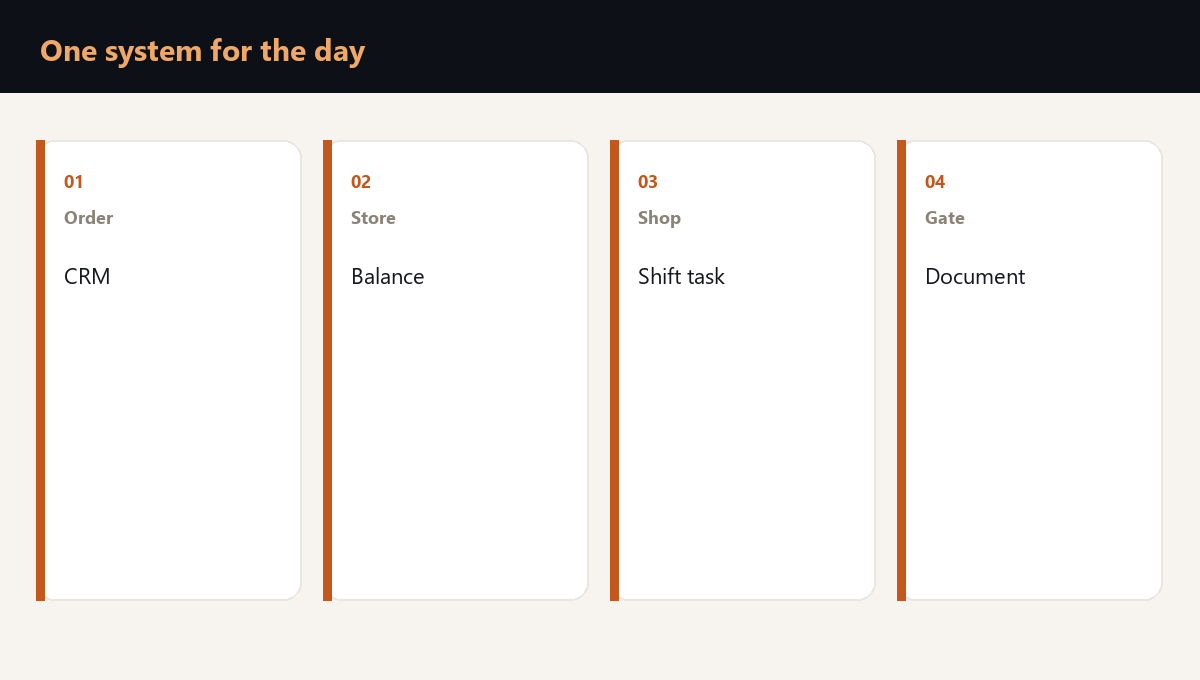
Where the system holds the whole shipping day
In the morning the storekeeper opens the stock. Production looks at the order. Logistics prints the document without which the vehicle does not leave. The salesperson in the CRM sees what was promised to the client. If all of these looks go into one system, the day has one door.
Packaging that ships with the goods is often recorded only there too. No line in the system, no carton on the delivery note, no shipment. That is a single point of failure as well, not in the yard but in the ledger.
What cannot be bought in a day, and what can be run by hand
A commodity item that people in the store recognise without the database can sometimes be shipped from a paper list exported in advance. A unique order under a contract, where only the CRM knows the price, the kit and the address, cannot be rebuilt by hand. That is what gets prepared: a copy, an export, and a person allowed to release a vehicle without the system.
- Can be run a second way. Commodity goods the store knows, if the list is already exported and kept apart from the database.
- Cannot be bought in a day. The order history, the kit under the contract, the right to sign a shipment, when they exist only in the system.
- Logistics. A carrier booking that lives in the same database stops with it. The carrier contact, and the rule for who is loaded first, need to be on paper.
Where this chain is looked at for your company
The ransomware readiness check walks the shipping day step by step and shows which step lives only in one system, what a day without it costs, and which step the company can truly run another way.
A copy of the database is the first, technical step. The second step belongs to the owner: which order can still be promised, and who is allowed to release a vehicle while the system is closed.
Frequently asked questions
Because the customer receives a vehicle, not a row in a database. If the order, the stock and the shipping document do not live apart, closing any of them stops the vehicle.
Goods the store recognises without a screen, and for which a list already sits outside the database. A unique kit under a contract is not shipped that way.
No. A copy brings the data back. The decision about which share of the day can still be promised to the customer is taken by a person named in advance.
Is your team ready for the first hour of a crisis?
You test a plan by running a scenario. Reading it is not enough. The assessment shows the gaps, and the corporate format works through them with your team on your own processes.